

APRIL 2025 GENDER PAY GAP REPORT
INTRODUCTION
NDREAMS BACKGROUND
nDreams is a leading VR developer based in Farnborough, Hampshire, UK. We have 3 development studios: Compass Studio (Farnborough – Hybrid), nDreams Studio Elevation (remote), and Near Light (Brighton – Hybrid).
nDreams Group HQ based in Farnborough houses our Operations, Shared Services and Talent teams, also operates a hybrid-working model where people can choose their preferred location. Headcount across the company decreased from 257 to 191 during the reporting period 5 April 2024 until April 2025, an decrease of 25%.
We believe nDreams has achieved pay equity by role for men and women and we make considerable effort to ensure our remuneration practices are fair and regularly reviewed.
We have been publishing our Gender Pay Report 2022 annually despite not been legally obliged to do so. We fully support the UK governments focus on gender pay gap and know that the game industry has a gender pay gap problem. We want to continue to help everyone levelling the playing field.
This report has been prepared in compliance with the Gender Pay Gaps Regulations 2017 and the figures represented below reflect accurate employee data gathered on 5th April 2025.
RESULTS
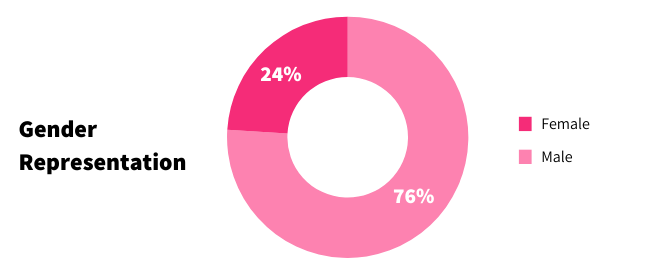
For this pay gap report 191 employees of nDreams were surveyed (24% women, 76% men). These numbers have not changed significantly since the last 2024 report.
We recognise that women remain underrepresented in leadership roles across the games industry, and that this continues to affect gender pay outcomes. Addressing this imbalance requires sustained, long term effort within our business and across the wider sector. There is growing recognition of the value that diverse perspectives bring, and we are committed to contributing to this change.
Our Equality, Diversity and Inclusion and Talent strategies focus on creating the conditions for meaningful and lasting progress. This includes strengthening pathways into leadership, supporting development at every stage, and reducing barriers to progression. While change at senior levels takes time, we remain committed to consistent and deliberate action.
We continue to take steps to improve female representation at all levels of our organisation. Our focus is on attracting, developing and retaining women by fostering an inclusive environment where they feel supported and able to succeed. By investing in our talent pipeline and embedding inclusive practices throughout the employee lifecycle, we aim to support sustainable progress and a more balanced workforce over time.
EMPLOYEES IN EACH PAY QUARTILE
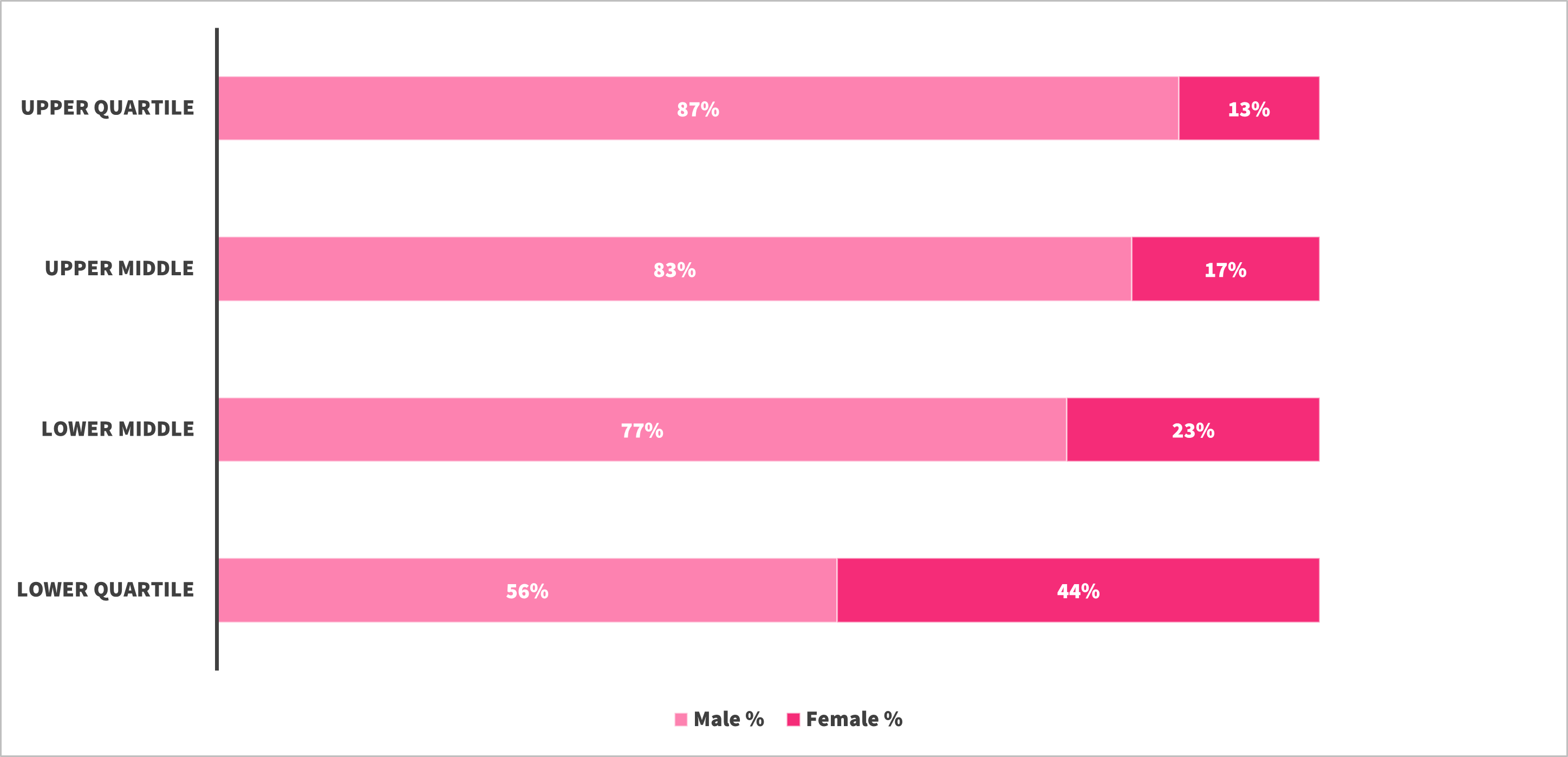
Quartiles are calculated by listing all employees from lowest to highest and then splitting the list into four equal sized groups and then calculating the percentage of men and women in these groups.
The representation of women in the upper quartiles has remained at 30% since . However, in real terms, the number has decreased from 19 to 14. This change reflects a company restructure, which resulted in a reduction in overall senior roles. As a result, changes to the composition of leadership positions have impacted the gender balance within the upper quartiles.
MEAN AND MEDIAN PAY GAPS
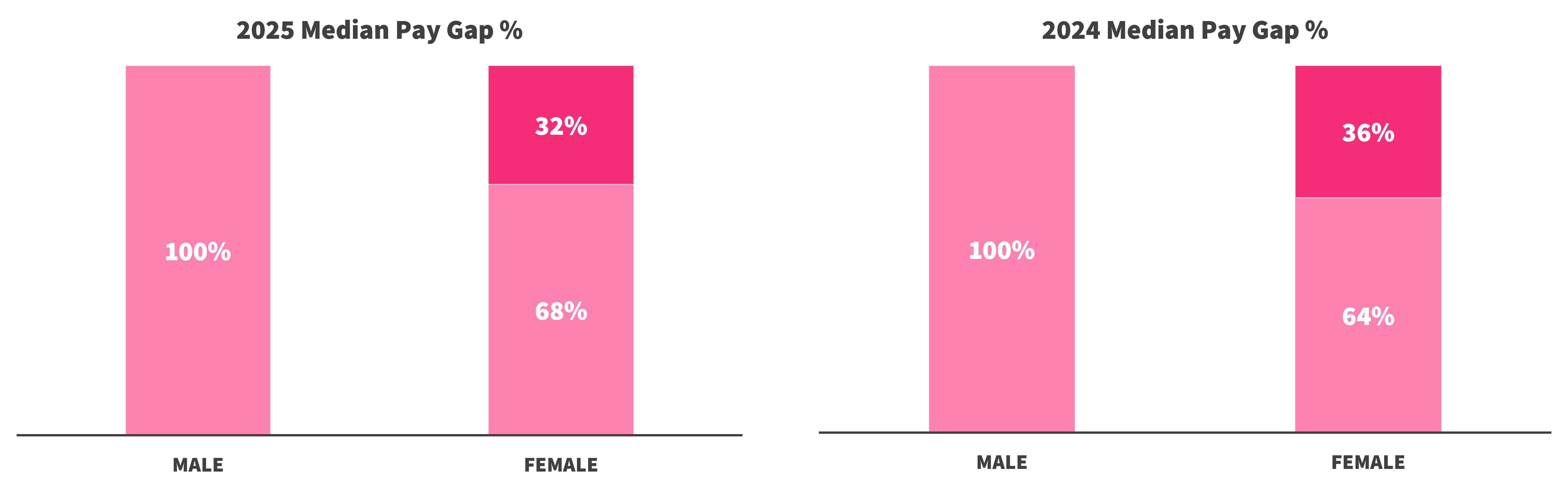
The mean pay gap compares the average pay for 100% men and women in a business. The median pay gap compares the mid-point hourly rate of pay for all female employees with the mid-point hourly rate of pay for all male employees.
Our overall gender representation has slightly increased from last year, with women making up 24% of our workforce, up 1% from 2024. We’ve seen a small improvement in non-development roles (44%, up from 43%), but a slight decline in Development roles (16%, down from 17%). This underrepresentation, particularly in Development, continues to influence our gender pay gap.
The mean hourly pay gap has widened in 2025 compared to the previous year. Women now earn £0.77 for every £1 earned by men, down from £0.83 last year. This reflects a larger difference in average hourly pay between men and women across the company.
To be clear, this gap is not the result of paying individuals differently for doing the same work. Rather, it reflects the structural imbalance in our workforce, with fewer women in higher-paying, senior, and Executive roles, particularly within Development.
MEAN & MEDIAN CONT.
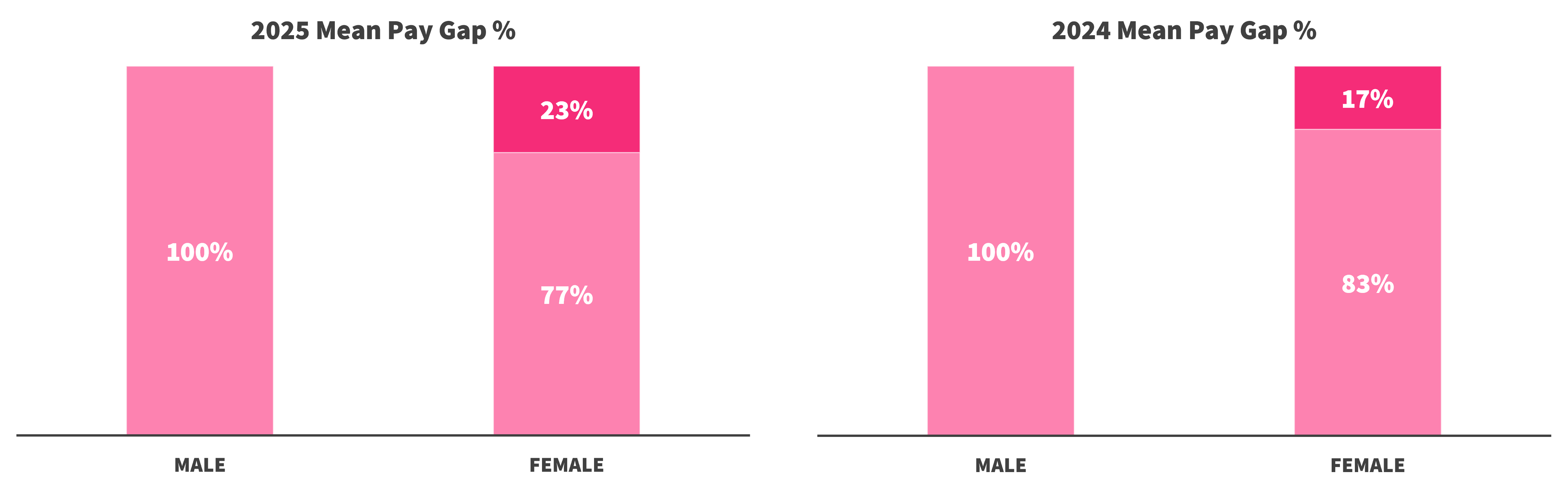
The median hourly pay gap, which compares the midpoint hourly rate for female employees with the midpoint hourly rate for male employees, has narrowed from 36 percent to 32 percent. While this represents an improvement, the gap remains substantial and highlights ongoing pay disparity at the middle of the pay distribution.
Within non development roles, female representation has increased across all pay quartiles except the upper quartile. This indicates improved representation at lower and middle pay levels, alongside lower representation in senior, higher paid roles.
Within Development roles, female representation has decreased across all pay quartiles. This reflects a reduction in the overall presence of women within Development roles during the reporting period.
When comparing median hourly rates women earn 32% less than men. Whilst this has reduced from 36% in 2024, this does still mean there remains a gender pay gap. In 2022, this was -7% with women earning more than men and, in 2021, women earned 21% less than men at nDreams which gives a clear indication of how the variance in grade/seniority of hiring can influence the data.
These figures show that there is still significant work to do. While there have been areas of improvement, persistent gaps remain, particularly within Development roles. This reinforces the need for continued and focused action.
The results underline the importance of strengthening our approach to improving gender representation across the company, with particular emphasis on progression into technical and leadership roles. We are committed to taking sustained, long term action to support meaningful and lasting change.
OUR COMMITMENT TO GENDER PAY GAP REPORTING
We’re committed to being transparent and proactive in addressing the gender pay gap. Our approach focuses on key areas that will help drive real change:
Diverse Leadership and Teams: We are focused on building an inclusive culture, increasing diversity at all levels of leadership, and making sure our supply chain reflects our commitment to diversity.
Inclusive Game Development: We aim to make sure our games represent diverse characters and are accessible to all players. We are integrating inclusivity into both our product designs and our business practices.
Engagement and Collaboration: We are committed to fostering an inclusive and supportive workplace through ongoing engagement and collaboration across the business. This includes developing and reviewing policies and practices that promote fairness, inclusion and a sense of belonging. We also encourage participation in activities that celebrate diversity and help build a stronger, more connected community.
Success and Development: We offer management and recruitment training to ensure fair promotion processes, equitable rewards, and a safe space for staff to speak up and share their experiences.
We know addressing the gender pay gap takes time, but we are committed to making steady progress and creating a workplace where everyone has an equal opportunity to succeed
You can see the full report here


